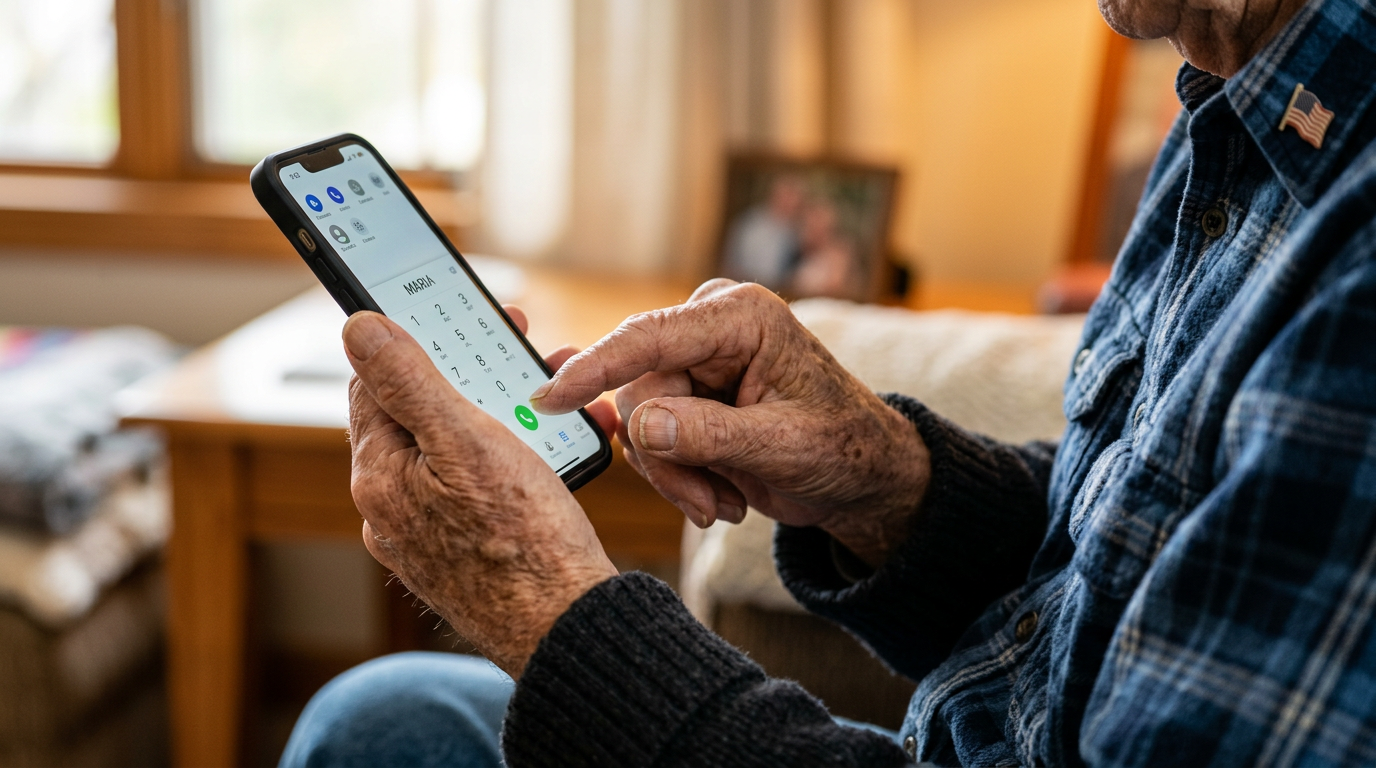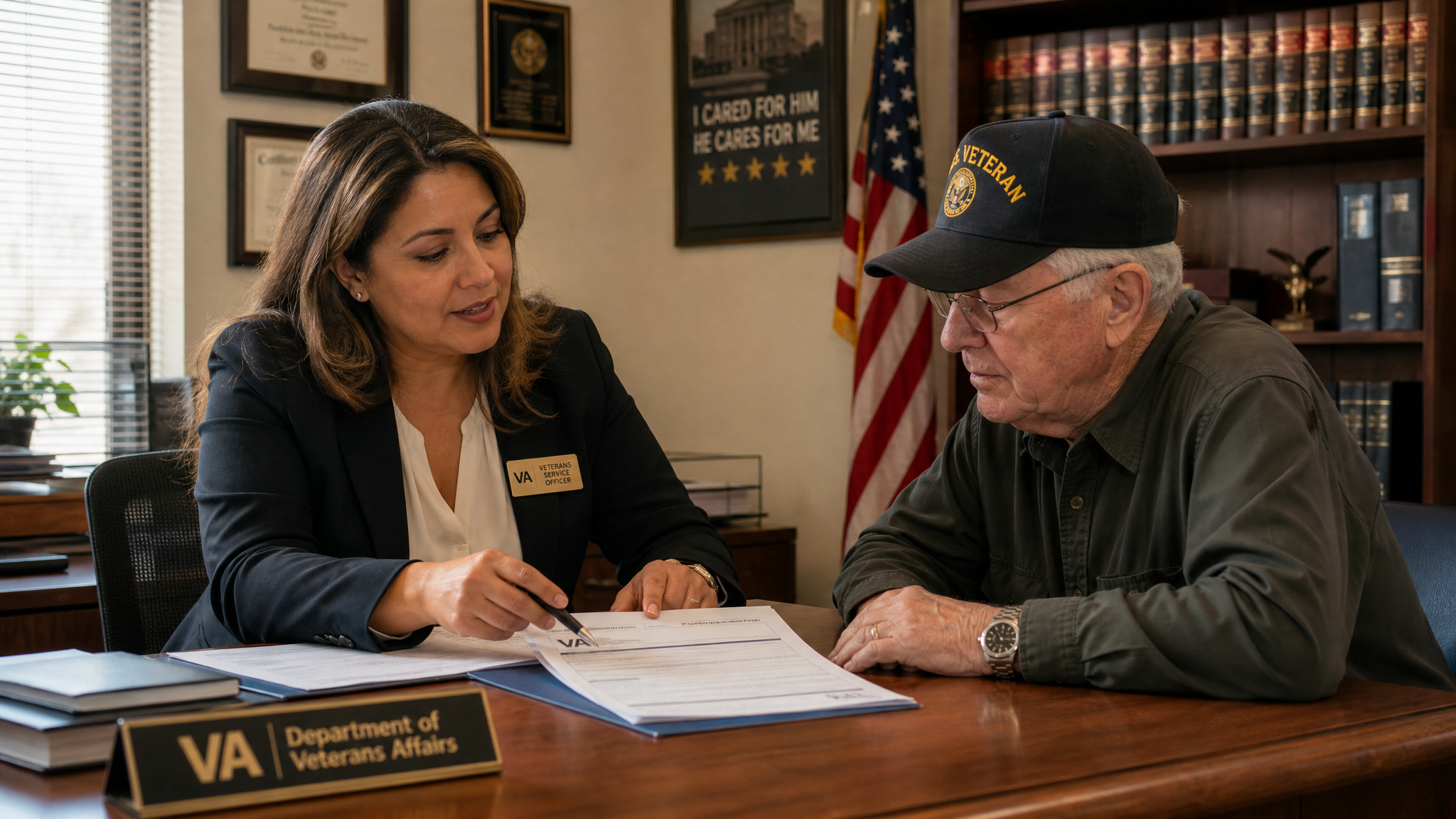
If a family caregiver is approved under PCAFC, she may get CHAMPVA in her own name, plus counseling, travel help, and a confidential support line.
You may have spent years assuming the VA only cares about the veteran and everybody else is on their own. That is how a lot of families get blindsided. Your caregiver may qualify for help too, and no, you are not too old to look into it now.
If you waited a long time, join the club. Veterans in their fifties, sixties, seventies and beyond still get benefits every day, because there is no age limit on a first claim and no VA benefit you age out of. Not one.
What this benefit really is
Here is the plain-English version. PCAFC can help the caregiver herself, not just the veteran she is caring for.
If a primary family caregiver approved under PCAFC has no other health insurance, she can receive CHAMPVA coverage in her own name. That can sit alongside other caregiver supports the VA already built into the program, including counseling, mental-health care, training, peer mentoring, and travel-related reimbursement when she goes with the veteran for care.
- CHAMPVA in the caregiver's own name, if she has no other health insurance
- Counseling and mental-health services for the caregiver
- Travel, lodging, and per diem when accompanying the veteran for care
- Training, self-care education, and peer mentoring
- Free confidential support line staffed by licensed professionals
A lot of veterans never hear this. Or they hear half of it, which is how families leave earned help sitting on the table for years.
You do not file this the wrong way
This is where people get crossed up. Do not file a separate CHAMPVA application for this caregiver coverage.
For a caregiver approved through the Program of Comprehensive Assistance for Family Caregivers, eligibility runs through VA Form 10-10CG. That is the caregiver application process the veteran and caregiver complete together. It is not Form 10-10d, which is used for spouses and children under different CHAMPVA rules.
That distinction matters because the VA loves paperwork, and paperwork loves sending people in circles. Wrong form, wrong lane, wasted time.
- Start with PCAFC approval.
- Apply together on VA Form 10-10CG.
- If the primary caregiver is approved and has no other health insurance, CHAMPVA enrollment flows from that approval.
If you want the full detail on this benefit, we have a plain-English breakdown here: /caregivers/caregiver-health-counseling.
What the health coverage may pay
Nothing in the VA world is one-size-fits-all, so treat every cost figure as an estimate based on the program rules. Still, the structure matters because it tells you whether this could actually ease pressure on your household.
Under CHAMPVA, the $50 per person deductible applies annually, with a $100 per family cap. After that, CHAMPVA generally pays 75% of the allowable amount, and there is a $3,000 yearly catastrophic cap.
That does not mean every bill disappears. It does mean this benefit may provide real coverage in the caregiver's own name when she otherwise has none.
The part families ignore until somebody breaks
Let me be blunt. A burned-out caregiver can take the whole house down.
The counseling and mental-health services under PCAFC are part of the benefit. Not a side quest. Not some luxury item. Not something she has to feel guilty about because "the veteran has it worse."
The same goes for the support line. The Caregiver Support Line, 1-855-260-3274, is free, confidential, and staffed by licensed professionals Monday through Friday, 8:00 a.m. to 8:00 p.m. Eastern. No separate application is needed just to use counseling support or call that line.
You are allowed to need care too
A caregiver who never sees a doctor is not being strong. She is building the exact emergency that puts him in a nursing home. That is not toughness. That is a preventable train wreck.
Why this matters more when you are older
Older veterans tend to shrug this stuff off. That is how families get hurt twice, first by the health problem, then by the missing support no one told them about.
If you are over 45 and thinking, "I waited too long," stop right there. You did not age out. The VA looks at eligibility and evidence, not whether you hit some made-up birthday cutoff.
And think past yourself for a minute. If your spouse or family caregiver is carrying the load, protecting her health protects your care, your home life, and your family's stability. This is not charity. This is part of the support structure tied to the benefits you earned.
What to do next, without making it complicated
Start where the paper trail starts. If you believe your caregiver may qualify, look at the PCAFC route and the joint application on VA Form 10-10CG.
- Confirm who is serving as the primary family caregiver
- Check whether that caregiver has other health insurance
- Gather the basics you will need for the PCAFC application
- Use the support line now if the caregiver needs help, at 1-855-260-3274
- Keep records of appointments, care needs, and the caregiver's role in the veteran's day-to-day support
And yes, personal responsibility still applies. No doctor's visits, no records, no proof of how serious the care situation really is. Evidence matters. Always.
Do not talk yourself out of what you earned
The VA is not going to call and say, "Good news, we found another benefit your family may need." You have to become aware of it yourself, then take the next step.
If this fits your situation, do not wave it off because you are older, private, stubborn, or sick of government forms. I get it. But there is no VA benefit you age out of, and waiting does not make the need smaller.
If you want free, no-pressure help understanding where this fits, Albert L. Thombs Jr., VA-accredited claims agent #45147, and his team are here when you are ready. Call 702-992-4883. The Aging Veteran is not the U.S. Department of Veterans Affairs and this article is general educational information, not legal, medical, or financial advice. Your privacy matters, and no pressure is the rule around here.
A quick, honest note
This article is general information, not legal advice, and every rate or example is an estimate. Your own claim depends on your records and the facts the VA finds. Albert L. Thombs Jr. is a VA-accredited claims agent (accreditation #45147). If you would like a real person to look at your situation, you are always welcome to reach out - there is no cost to ask.